
All Categories
How Much Sleep Do Kids Need?
Babies need 14 to 17 hours, kindergarten aged children need 10 to 13 hours, and teenagers typically need 8 to 10 hours of total sleep.


While closing an ottoman bed, the aim should be to safely and smoothly close it without damaging the mechanism or causing injury. Users should begin by checking that the mattress and bedding are evenly distributed to prevent imbalance. The alignment is key to ensuring a secure and proper close.
Hold the designated handle or lifting strap firmly with both hands, and apply even, downward pressure to guide the base into position. When the base approaches the closed position, listen for alignment cues such as a click or a firm stop, which indicate the locking mechanism has engaged properly.
Users should be careful and check for obstructions like bedsheets, pillows, hands, or pets before closing and use both hands to keep the motion controlled and avoid straining your wrist or back. You should never force the base shut and double-check alignment and mattress placement if it resists. Following these steps carefully helps keep you and your bed safe and ensures a longer lifespan for the mechanism.
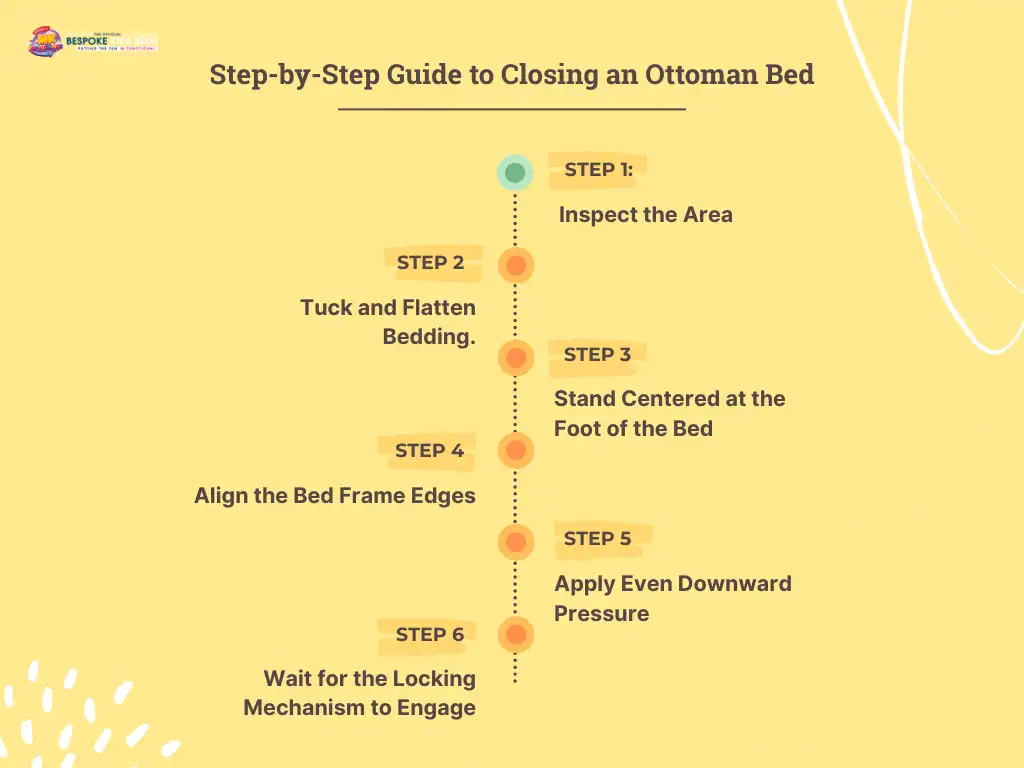
An ottoman bed provides excellent storage while maximizing space in children’s bedrooms. However, closing it properly is essential to ensure it remains in good working condition and safely locked into place. A common mistake while closing an ottoman bed is applying uneven force or neglecting proper alignment, which can cause injury or damage the mechanism.
Step 1: Inspect the Area
Ensure no obstacles are around or under the bed and remove any items that could block the frame or lifting mechanism before attempting to close it.
Step 2: Tuck and Flatten Bedding
Make sure the bedding is neatly tucked and evenly spread. Nothing should be bunched up or sticking out, as this can prevent the bed from closing properly.
Step 3: Stand Centered at the Foot of the Bed
Position yourself at the foot, facing the bed. Grip the handle or strap with both hands for better control and balance.
Step 4: Align the Bed Frame Edges
Visually and physically inspect that the bed base aligns evenly with the bed frame. Misaligned edges can lead to locking issues or wear over time.
Step 5: Apply Even Downward Pressure
Using both hands, apply steady, even pressure to lower the base. You can gently use your body weight to assist. Avoid jerky or sudden movements.
Step 6: Wait for the Locking Mechanism to Engage
As the bed nears full closure, listen for a click or feel a firm stop. The sound confirms that the locking mechanism has engaged.
In addition, if you notice resistance or the frame appears uneven, stop and reopen slightly and check for misaligned bedding, items caught in the frame, uneven pressure being applied, and adjust and try again gently. Forceful closing may cause permanent damage to the lifting mechanism or the bed base. Users should avoid abrupt force, which can damage the struts and the frame, maintain strut cleanliness, as dust or grime can hinder performance, and check the mechanism tension from time to time.
Here is a list to know if the bed is properly closed or not:
Before closing your ottoman bed, it’s essential to ensure the area around the bed is completely clear. Common items like rugs, toys, or laundry baskets can cause misalignment or block the bed’s descent. Misalignment not only puts strain on the frame but may also prevent the bed from locking properly and securely.
Here are some common obstructions to remove:
This step is crucial for both user safety and to ensure the bed closes smoothly. Also, users should wear closed-toe shoes to protect their feet from accidental impact, double-check if they have enough space to apply even pressure safely and steadily during the bed’s closure.
Unsecured bedding, such as sheets, blankets, or pillows, can block the hinges and cause the ottoman bed to resist closure. Over time, this can damage the gas struts or prevent the bed from locking properly.
To avoid these issues, take the following steps before closing:
Securing bedding makes the closing process easier and ensures the bed operates smoothly, and avoids unnecessary strain on the mechanism.
The bed’s edges need to be properly aligned for the mechanism to engage fully. Misalignment can lead to uneven pressure on the hinges and prevent the bed from locking correctly, causing one side to remain elevated.
To ensure proper alignment, follow these steps:
A good cue to watch for: “If you hear resistance or feel uneven tension as you begin to close, stop and realign before proceeding.” Proper alignment is critical to prevent wear on the mechanism and ensure that the ottoman bed stays secure after closing.
Closing an ottoman bed correctly requires even pressure to ensure the frame closes smoothly, avoids straining the hydraulic system, and allows the locking mechanism to engage properly.
Here is the optimal technique for applying pressure:
Some common mistakes to avoid while closing an ottoman bed are pressing down on one side only, which can twist or misalign the frame, jerking or slamming the handle, or letting go midway through the motion, which can cause an abrupt drop or incomplete closure. Evenly controlled pressure protects the hydraulic system and ensures the bed locks into place safely.
Until the locking mechanism fully engages, the ottoman bed isn’t completely closed. This step ensures the frame stays securely in place, protects the internal belongings, and prevents unexpected openings.
To confirm the mechanism has locked:
If you don’t hear a click or notice the bed is raised on one side, gently lift and realign the frame, and press down evenly until the mechanism engages properly. Users should never leave the bed partially latched, as this can lead to sudden openings and may damage the gas pistons over time. You should double-check the alignment and locking after each close to keep the bed secure and extend the life of the lift system.
The final safety check is essential to ensure everything is properly secured and safe for everyday use, and skipping this step can lead to unexpected openings, potential injury, and increased wear on the mechanism.
Here’s what to verify:
Performing a final safety check every time you close the bed helps maintain the ottoman bed’s performance and extends the life of its hydraulic mechanism. Consistency is key to your safety and the bed’s durability.
Ottoman beds feature various lifting mechanisms that aid in opening and closing the storage base smoothly. The three main types are gas-assisted ottoman bed, electric-assisted ottoman bed, and hybrid ottoman bed. Understanding the mechanism type helps you operate your bed safely and correctly, and is crucial to ensure the bed is closed properly and efficiently.
A gas-assisted mechanism is the most common type and is powered by pressurized gas struts (pistons). It features smooth, quiet operation and requires manual effort with steady and even pressure to lower the frame. The electric-assisted mechanism uses an electric motor to raise and lower the bed by pressing a button. Its features include built-in safety stops or sensors, and it is ideal for users with limited mobility.
Lastly, hybrid ottoman beds combine gas struts with manual safety latches or locks. Usually, the bed is manual but includes override features for extra control or safety. It adds an extra layer of security, which is found in higher-end or commercial models.
| Mechanism Type | Force Required | Responsiveness | Safety Features |
| Gas-Assisted | Moderate (manual) | High (if aligned) | Requires even pressure and a manual lock |
| Electric-Assisted | Minimal (automatic) | Consistent | Motor stops, child lock, sensors |
| Hybrid | Moderate and manual | Reliable | Override locks, gas control |
For a quick and detailed reference, consider using a diagram or comparison chart and visualize how each mechanism functions. This will help you determine which type of bed to buy and how to handle it properly.
Gas-assisted ottoman beds use hydraulic pistons to help lift and close the bed. These systems require the user to apply even pressure during closure to avoid overloading the pistons, although the struts help manage the weight of the mattress. To close a gas-assisted bed:
This system provides controlled closure, but it’s essential to inspect the pistons occasionally for wear or oil leakage. Users should keep their fingers and hands clear of hinges and edges during movement to avoid pinching. Also, don’t let the frame drop suddenly, as it can damage the struts and misalign the frame.
Electric-assisted ottoman beds use built-in motors to control the bed’s descent with minimal effort. These beds often feature a “close” button that activates the mechanism and is ideal for users seeking convenience or with limited mobility. Here’s how to close them:
While convenient, it’s important to test the functionality of the button regularly, especially if the bed is battery-operated, to avoid malfunctioning. It has child lock safety features to prevent accidental operation, especially useful in households with kids, and a pause sensor to detect resistance during closing. Users should check the power source or battery backup of the button to ensure it responds.
Hybrid ottoman beds feature a dual-mechanism design that combines gas pistons and electric controls, offering the flexibility of manual or motorized closure. To close a hybrid bed manually:
If there’s a power failure or system issue, users can switch to manual mode and safely close the bed using manual force. Some designs come with a spring reset mechanism that helps transition between electric and manual modes.
Hybrid mechanisms offer the best of both worlds, and buyers should check the user manual for brand-specific override steps and part locations. Since these beds vary by model, a diagram or labeled image can help you quickly identify override levers, reset buttons, or handles.
Taking a few precautionary steps can help you resolve the issue safely and effectively, and maintain smooth operation over time while minimizing injury risk and preventing damage to the mechanism. A quick pre-checklist can make a huge difference in avoiding strain on your bed and you.
Here is a list of pre-closure checklist & preparation:
Following these steps helps protect the bed’s electric or hydraulic systems from unnecessary wear and prevent common problems like locking, failure, uneven closure, or damaged struts.
Ottoman beds can experience occasional issues with closure, often due to misalignment, obstruction, or mechanical wear. These can be resolved with a few simple checks and adjustments. Here are a few quick troubleshooting checklists:
Misalignment
Obstruction or Blocked Frame
Mattress Weight
Lubricate Moving Parts
When the Ottoman bed shows signs of issues, users should test one solution at a time to isolate the cause, consult their user manual for model-specific guidance, and not force close the bed to avoid damaging the frame or mechanism. Ignoring early signs like uneven movement or excessive resistance can lead to long-term damage to the
Regular maintenance is key to ensure your ottoman bed operates smoothly. It can significantly prolong the life of your ottoman bed and ensure it continues to last for years. Simple and routine care can prevent common issues like resistance during closure, stiffness, or hydraulic wear, and help you avoid costly repairs. Follow these simple tips to keep your bed in top condition.
Lubricating the moving parts of your ottoman bed with silicone-based lubricant helps reduce friction, preventing squeaks and stiffness. It should be done once a year or whenever you notice resistance during closure.
Hydraulic pistons are crucial for lifting and lowering the bed. Users should regularly inspect them for signs of wear or damage, such as oil leakage or reduced tension and difficulty lifting or lowering the bed. Consult a professional for repairs or replacements to avoid damage to the entire system.
Dust and debris can accumulate in the tracks and frame of the bed, causing resistance or blockages. Wipe down the pistons to remove any dust buildup and regularly clean the frame and tracks with a dry cloth or vacuum as needed.
Open and close the bed to check for smooth operation, new resistance, or strange noises. Detecting minor issues early helps prevent larger mechanical problems.
Buyers should schedule routine checks as part of their seasonal cleaning or alongside other home maintenance tasks. For those seeking reliable ottoman beds, MK Furnishing offers a wide selection designed for durability and comfort. These beds are low-maintenance, making them a perfect fit for modern living.
Crafted with high-quality hydraulic systems and reinforced frames, they are built to withstand long-term use without the need for constant upkeep. For those who enjoy a hands-on approach, building an ottoman bed yourself can also be a rewarding project. However, choosing a well-designed ottoman bed from MK Furnishing ensures less maintenance and helps keep it in optimal condition with just a few simple care tips.
If your ottoman bed won’t close completely, the most likely causes are a misaligned frame or hinges, an obstructed mechanism or bedding, or a heavy mattress. Here are the most frequent reason with clear instructions on how to troubleshoot them:
– Misalignment: The frame may not be properly aligned, preventing it from locking securely.
– Obstructions: Objects or fabric stuck in the tracks may prevent full closure.
– Heavy Mattress: The mattress may be too heavy for the lifting mechanism to close.
To fix this, check for alignment, remove any obstructions, and ensure the mattress meets the weight requirements.
After closing your ottoman bed, ensure the frame is locked securely by ensuring the bed frame sits flush with the base with no gaps or uneven sides. Clear any objects or bedding that is blocking the track and gently press down until you hear the click, confirming the lock.
If the mattress is too heavy, it may prevent the ottoman bed from closing properly. This issue is common with gas-assisted or hybrid mechanisms. To resolve this:
– Check the weight limit for your bed model
– Remove heavy toppers, blankets, or pillows temporarily to reduce the load
– If the issue persists, consider upgrading to a stronger lifting mechanism or switching to an electric-assisted bed

Babies need 14 to 17 hours, kindergarten aged children need 10 to 13 hours, and teenagers typically need 8 to 10 hours of total sleep.

A mattress should be changed typically anywhere between 6 to 10 years, depending on the mattress type, quality, total usage, and the consistency of the
